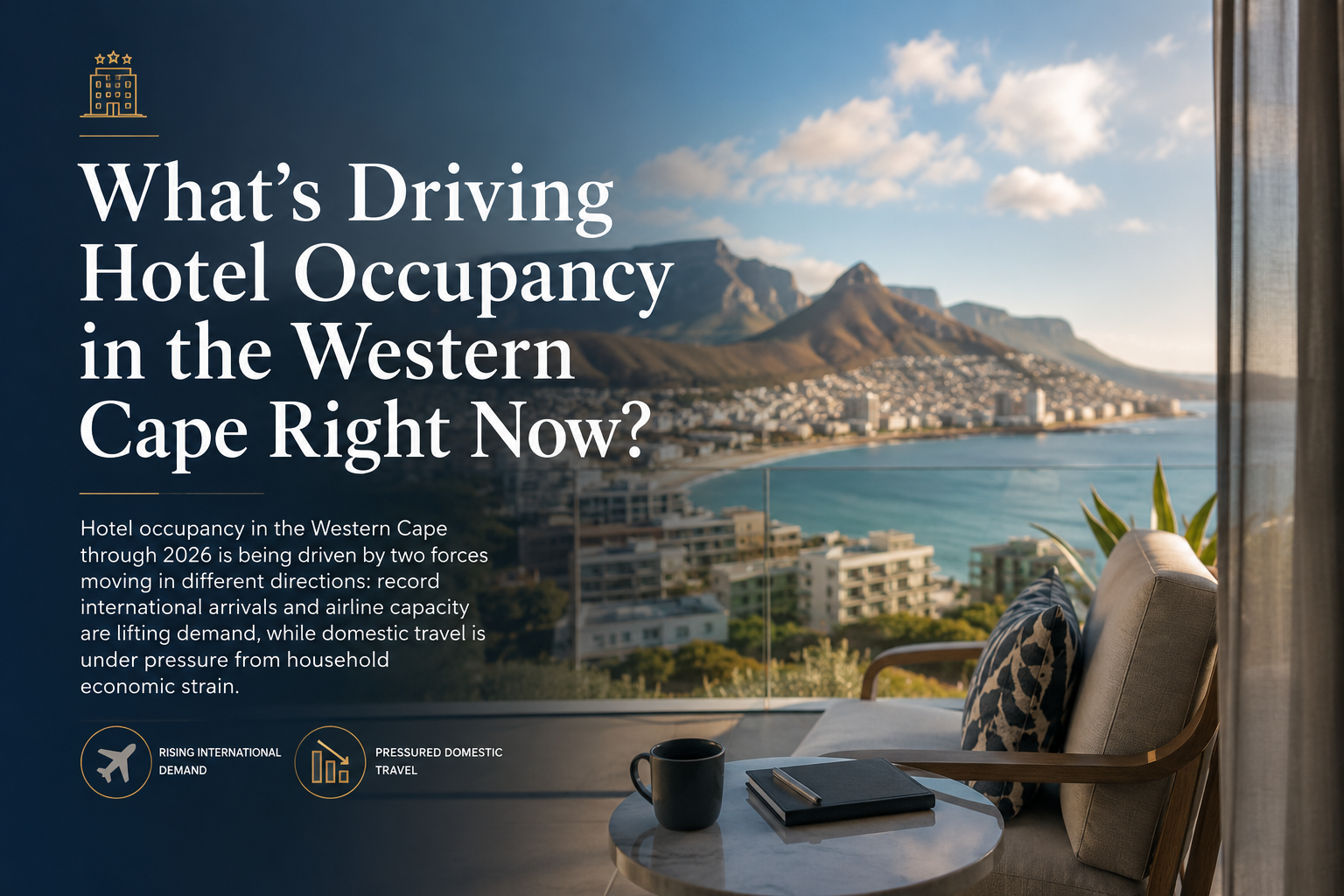
The Iran crisis has caused several reported negative effects on South Africa’s tourism sector, particularly Cape Town’s 4- and 5-star hotel sector. These stem from airspace closures, flight disruptions, higher costs, and reduced traveller confidence. The impacts hit high-end properties hard, as they depend on premium international visitors.
Primary Impact: Gulf Visitors (Key High-Value Market)
• Cancellations and sharp drop in bookings from Gulf tourists (UAE, Qatar, Saudi Arabia, etc.), who form a major segment for luxury leisure in Cape Town, especially in areas like the V&A Waterfront.
• Major international hotels report low occupancy rates and reduced advance reservations.
• Tour guides, operators, and travel agents linked to this market have seen significant income losses (e.g., one guide reported losing R350,000–R500,000 in recent months due to 60–80% of normal bookings coming from Middle Eastern clients).

Effects from Local South African Carriers and Aviation Operations
Local and regional carriers, along with operations at South African airports, face direct disruptions:
• Flight cancellations and limited schedules: Early in the crisis (late February–March 2026), airspace closures over the UAE, Qatar, Iran, and surrounding areas led to multiple cancellations at Cape Town International Airport (e.g., 4 outbound flights affected initially, with broader impacts on Emirates, Qatar Airways, and Etihad services). South African Airways (SAA) and other local operators experienced knock-on effects from reduced connectivity.
• Reduced capacity on key routes: Gulf carriers (major feeders for long-haul traffic to SA) operate on limited schedules into Cape Town and Johannesburg, with tight seat availability and rerouting. This constrains inbound tourism flows.
• Higher operational costs for local airlines: Surging jet fuel prices (linked to regional instability) prompted temporary fuel surcharges by carriers like FlySafair. These costs are passed on, increasing ticket prices for both international and domestic legs, which dampens overall demand for leisure travel to Cape Town.
• Stranded passengers and uncertainty: South African travellers and inbound visitors faced chaos, contributing to a broader perception of travel unreliability that deters bookings.
• These aviation issues create a ripple effect: fewer reliable flights mean softer forward bookings for hotels, even as some Gulf services partially resume.
Impacts from Other International Source Markets
• Beyond the Gulf, disruptions affect travellers from Europe, Asia, and other long-haul markets that rely on Middle East hubs for connections to South Africa:
• Softer demand from Asia and Europe: Cape Town sees effects in high-end segments from these regions, with cancellations or postponed trips due to disrupted transit via Dubai, Doha, or Abu Dhabi. Longer reroutes (adding hours and costs) and uncertainty make South Africa less attractive compared to shorter-haul alternatives.
• Higher airfares and reduced accessibility: Rerouting, fuel surcharges, and limited capacity drive up prices globally. This particularly hurts premium 4- and 5-star hotels, as cost-sensitive or uncertainty-averse travellers from Europe/Asia opt for domestic/regional trips or destinations with better connectivity (e.g., Mauritius or regional African spots).
• Broader long-haul hesitation: Some reports note declining appetite for extended international travel overall, with business and high-end leisure segments most affected. While not as severe as the Gulf drop, this contributes to “soft and volatile” forward bookings in Cape Town’s luxury sector.
Overall Sector Pressure on Cape Town’s 4- and 5-Star Hotels
• Revenue strain and operational challenges: Luxury properties face lower occupancy, reduced spending on premium experiences (dining, tours, etc.), and the need for incentives/discounts to attract remaining visitors.
• Ecosystem effects: Knock-on impacts hit restaurants, tour operators, and related businesses serving high-end guests.
• The situation remains fluid as of mid-April 2026, with recovery dependent on Middle East airspace stabilization and fuel price normalization. Some earlier optimism about redirecting tourists away from the Middle East has not fully materialized in the short term due to persistent travel barriers.
• These effects are described as a significant disruption rather than total collapse, with the high-end Cape Town market most exposed due to its reliance on long-haul and Gulf traffic. For the most current data, refer to Cape Town Tourism, the Tourism Business Council of South Africa (TBCSA), or recent industry surveys. The broader tourism sector (including SMEs) reports that over 80% of businesses have felt some impact in earlier assessments.