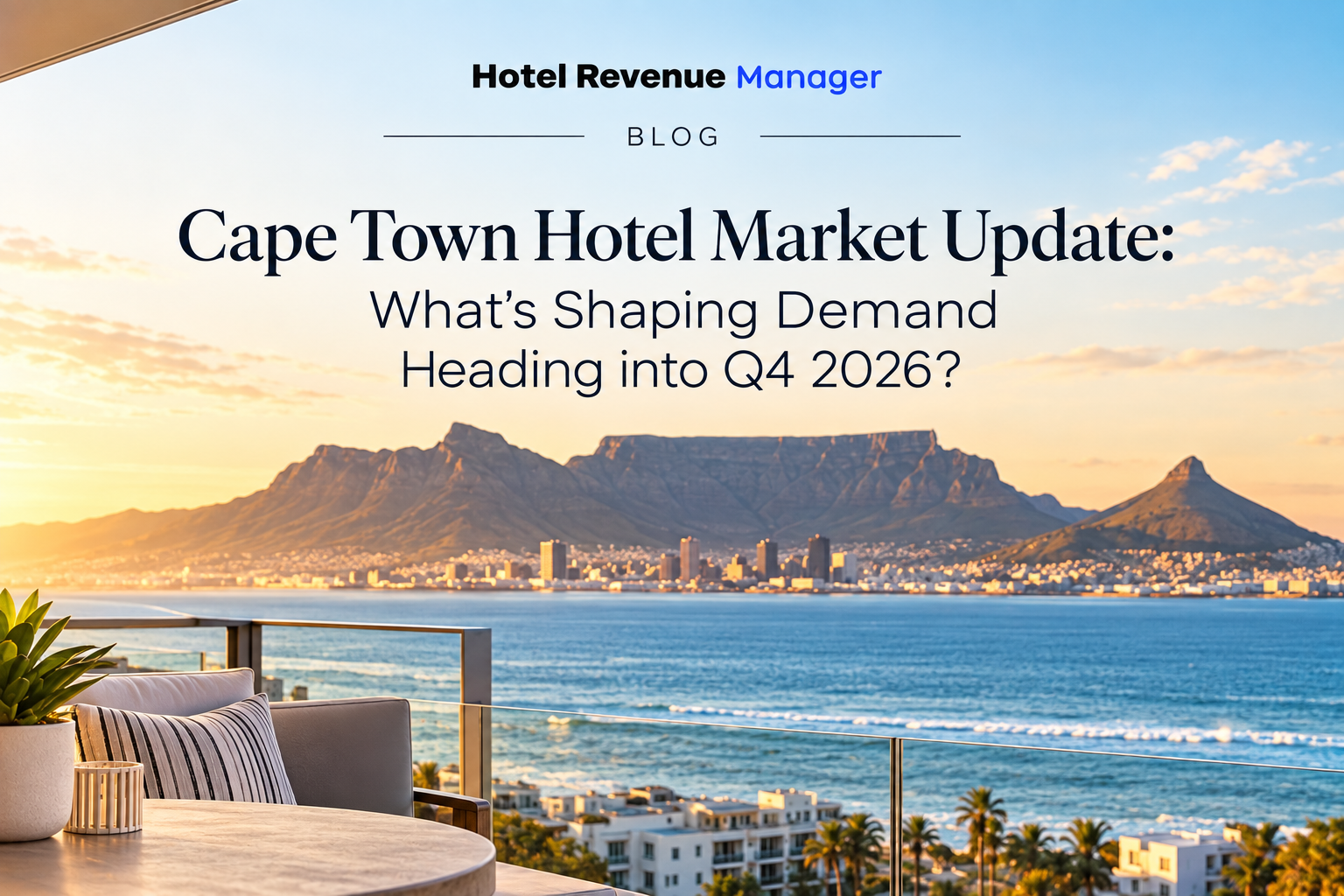

Hotel occupancy in the Western Cape through 2026 is being driven by two forces moving in different directions: record international arrivals and airline capacity are lifting demand, while domestic travel is under pressure from household economic strain. For hotels reliant on the local market, this split is the single most important dynamic shaping performance right now — international demand is compensating for domestic softness, but not evenly across every property or season.

Is international demand offsetting the domestic pullback?
Largely, yes — at the city level. Cape Town Tourism’s 2025 Economic Value of Tourism report recorded international visitor spending reaching a record high, even as domestic tourism spend declined due to real economic pressure on South African households. South Africa’s international tourist arrivals rose 12.3% in the first half of 2026, with the United States again ranking among the country’s largest overseas source markets.
The catch: this is a city-wide average. Properties positioned toward international leisure and business travel are seeing the benefit directly. Hotels more dependent on domestic corporate or regional travel are more exposed to the pullback, and averaging the two segments together can mask real performance gaps at property level.
Is airport capacity translating into hotel demand?
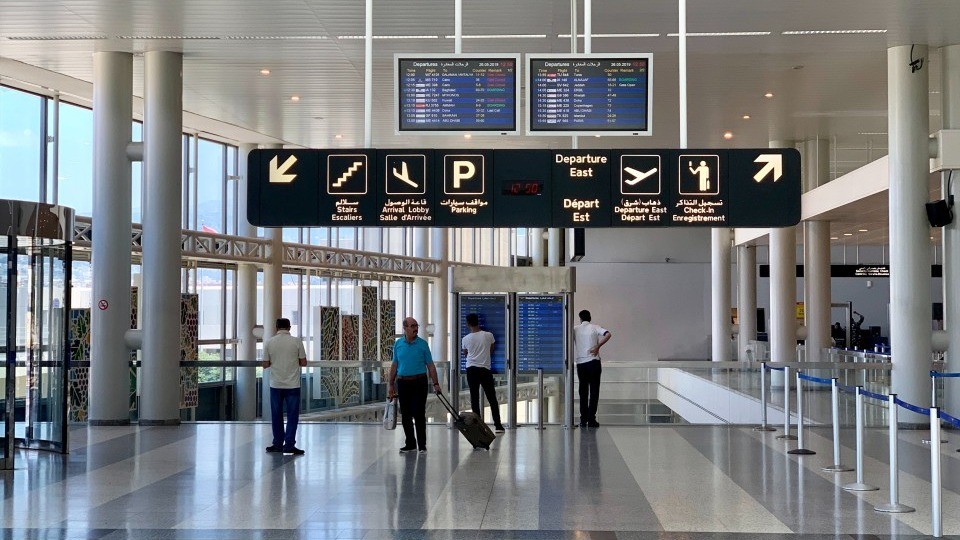
Yes, and increasingly outside peak season too. Cape Town International Airport handled a record number of passengers in 2025, and industry body Wesgro projects a 20% increase in flight capacity between April and September 2026 — the traditional off-peak period — reflecting demand growing outside the December-to-February high season. Regional off-peak room-night demand has already responded: between 2015 and 2025, off-peak room-night demand grew 22% in the Cape Winelands and 31% along the Garden Route.
For Cape Town proper, this points toward a gradual flattening of the seasonality curve — historically one of the biggest structural challenges for hotels in the region, where the gap between peak and low-season occupancy has run as wide as 30-40 percentage points.
Is the Dubai flight disruption affecting Cape Town’s international pipeline?
Possibly, on the margins. UAE airspace restrictions tied to regional conflict closed Dubai International Airport (DXB) to many carriers between late February and May 2026. Since restrictions lifted, international airlines have returned to Dubai in waves rather than all at once — as of August 2026, roughly ten major carriers had still not fully resumed DXB service, with some return dates stretching into late October.
Dubai is a significant connecting hub for travelers reaching Cape Town from Asia and parts of the Middle East, and Emirates — Cape Town’s key long-haul carrier on that route — has been operating a reduced schedule while rebuilding capacity across its wider network. This is a supply-side constraint rather than a demand problem: it wouldn’t show up as weak interest in Cape Town, but it could be quietly capping a portion of Asian and Middle Eastern feeder traffic through Q3, even as European and North American arrivals hit records. Hotels with meaningful exposure to Asian or Middle Eastern source markets are the ones most likely to feel this, and it’s worth watching Emirates’ capacity recovery through October as a leading indicator for that segment specifically.

What does this mean for rate strategy through Q3?
Three practical implications follow from the data:
- Off-peak periods deserve more active rate management than they’ve historically received. If off-peak demand is genuinely strengthening at the regional level, pricing on autopilot through the shoulder months risks leaving revenue on the table.
- Source-market mix matters more than headline occupancy. A hotel filling rooms through domestic corporate accounts is in a materially different position than one filling rooms through international leisure channels, even if the occupancy percentage looks identical on a report.
- Rate decisions need to be checked against a live competitor set, not last year’s patterns. With demand shifting between segments and seasons, comp set data from twelve months ago is a weaker guide than it used to be.
What should hotel owners watch for through the rest of 2026?
Two factors are worth monitoring alongside occupancy: continued growth in off-peak international air capacity (a leading indicator for shoulder-season demand), and the pace of domestic economic recovery, since domestic travel remains the more exposed segment. Hotels with a revenue strategy that actively adjusts to this split — rather than pricing uniformly across source markets and seasons — are best positioned to capture the international upside without over-relying on a domestic segment currently under strain.

Hotel Revenue Manager provides outsourced revenue management and tourism business intelligence to independent hotels across South Africa, based in Cape Town.