Hi All
It’s been a while since my last post—here are some fresh insights from the Cape Town hotel market as of early March 2026.
2025 Recap
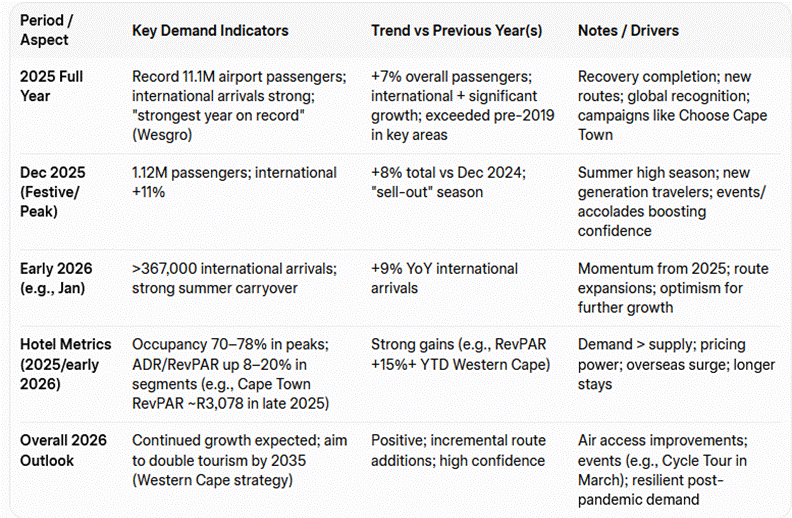
The year delivered a very strong post-peak period (Jan–Apr), with demand holding firm through the year. Since mid-2024, ADR has been the primary growth driver, often rising 8–17%+ YoY in key periods, while occupancy stayed similar or edged slightly lower in some months despite high bases (e.g., 70–78% in peaks). This rate-led performance reflects pricing power from sustained tourism demand outpacing modest supply additions.
2026 So Far
Early reports from STR, CoStar, and Wesgro (plus OTA data) indicate demand remains up compared to 2025—e.g., record airport passengers in 2025 carried momentum into 2026, with international arrivals strong and summer season described as exceptional. RevPAR continues to climb (e.g., Western Cape YTD gains around 15%+ in late 2025 data, with Cape Town-specific boosts).
Yet, on the ground, many operators report the opposite: same or lower rates, stable/lower occupancy, slower booking pace, and more last-minute reservations.
Why the Disconnect?
We believe it’s twofold:
- Localized Supply Increases
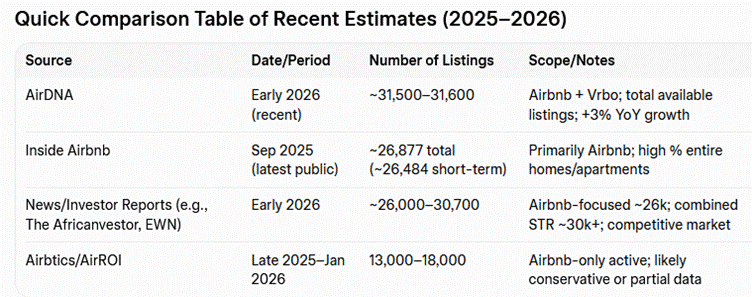
While overall hotel supply growth in Cape Town has been modest and disciplined (incremental openings), certain segments or sub-areas have seen noticeable additions—e.g., new luxury/upper-scale , explosion of Airbnb’s (near 32 000) and boutique developments. When demand rises but supply rises commensurately (or faster in specific pockets), equilibrium shifts: occupancy pressure increases, rate growth slows or reverses, and competition intensifies. This creates pockets of softness even as macro demand metrics look robust.
- Airbnb
- Total accommodation sector

- Booking Behavior Shifts
Travelers are increasingly waiting longer for deals (last-minute surge), influenced by economic caution, more options, or confidence in availability. This compresses forward visibility and pressures average rates, even if total demand is up.
What Now? How to Stay Competitive and Boost Profitability

In this environment, focus on proactive, high-impact levers:
- Differentiate Your Offering
Go beyond rooms—create unique value propositions tied to Cape Town’s appeal (e.g., curated experiences like wine route tours, eco-adventures, or wellness retreats). Make your property highly discoverable on AI-powered search engines (visitors increasingly skip traditional Google). For practical steps on implementing AI for hotels, check this guide: https://hotel-revenue-manager.com/implement-ai-for-hotels/
- Optimize Revenue Management
Shift to sophisticated dynamic pricing powered by software/tools. Monitor competitors in real-time, segment aggressively, and use data (STR/CoStar, OTAs, internal PMS) to capture value without race-to-the-bottom discounting.
- Enhance Guest Experience & Loyalty
Flip the mindset: Instead of “this is my price,” ask “how can I deliver enough value for guests to happily pay this price?” Invest in personalization, standout service, and loyalty programs that reward repeat/direct bookings—reducing OTA dependency and building resilience.
- Diversify Demand Sources
“Fish where the fish aren’t”—target underserved or emerging segments (e.g., African business travelers, digital nomads/bleisure, MICE events via CTICC, or shoulder-season packages for European/North American markets). Spread reliance beyond peak leisure tourism.
- Core Fundamentals
Control costs rigorously (e.g., energy efficiency via solar, local sourcing), boost operational efficiency (tech for staffing/inventory), and strengthen marketing/partnerships (e.g., with Cape Town Tourism, airlines via Air Access, or influencers for targeted reach).
These steps help operators navigate localized pressure while capitalizing on Cape Town’s strong overall fundamentals (record tourism momentum heading into 2026). The market remains promising—it’s about smart positioning in a more competitive landscape.
Hope this clarifies the “on-paper vs. on-the-ground” gap!
Best,
Jaco