
We shared in our previous blog that a couple of years ago, most of us marketers hadn’t the foggiest idea of how to use AI for marketing. Suddenly, we’re writing LinkedIn posts about the best prompts to whisper into ChatGPT’s ear.
So our goal in this article is to view seven of the most prominent risks of using AI for marketing from a very high ground. We’ve rounded up advice from experts to help mitigate these risks. And we’ve added plenty of resources so you can dig deeper into the questions that concern you most.
Today we continue with number 4.
Risk #4: Homogeneous content
AI can write an entire essay in about 10 seconds. But as impressive as generative AI has become, it lacks the nuance to be truly creative, leaving its output often feeling, well, robotic.
“While AI is great at producing content that’s informative, it often lacks the creative flair and engagement that humans bring to the table,” Weaver says.
AI is made to imitate
Ask a generative AI writing bot to pen your book report, and it’ll easily spin up 500 words that competently explain the main theme of Catcher in the Rye (assuming it doesn’t hallucinate Holden Caulfield as a bank robber).
It can do that because it’s absorbed thousands of texts about J. D. Salinger’s masterpiece.
Now ask your AI pal to write a blog post that explains a concept core to your business in a way that encapsulates your brand, audience, and value proposition. You might be disappointed. “AI-generated content doesn’t always account for the nuances of a brand’s personality and values and may produce content that misses the mark,” Weaver says.
In other words, AI is great at digesting, combining, and reconfiguring what’s already been created. It’s not great at creating something that stands out against existing content.
Generative AI tools are also not good at making content engaging. They’ll happily churn out huge blocks of words with nary an image, graph, or bullet point to give weary eyes a rest. They won’t pull in customer stories or hypothetical examples to make a point more relatable. And they’d struggle to connect a news story from your industry to a benefit your product provides.
How to avoid homogenous content
Some AI tools, like Writer, have built-in features to help writers maintain a consistent brand personality. But you’ll still need an editor to “review, and edit the content for brand voice and tone to ensure that it resonates with the audience and reinforces the organization’s messaging and objectives,” Weaver advises.
Editors and writers can also see an article like other humans will. If there’s an impenetrable block of words, they’ll be the ones to break it up and add a little visual zhuzh.
Use AI content as a starting point—as a way to help kickstart your creativity and research. But always add your own personal touch.
Risk #5: Loss of SEO
Google’s stance on AI content has been a little murky. At first, it seemed the search engine would penalize posts written with AI.
[Image: tweet from John Mueller on AI]
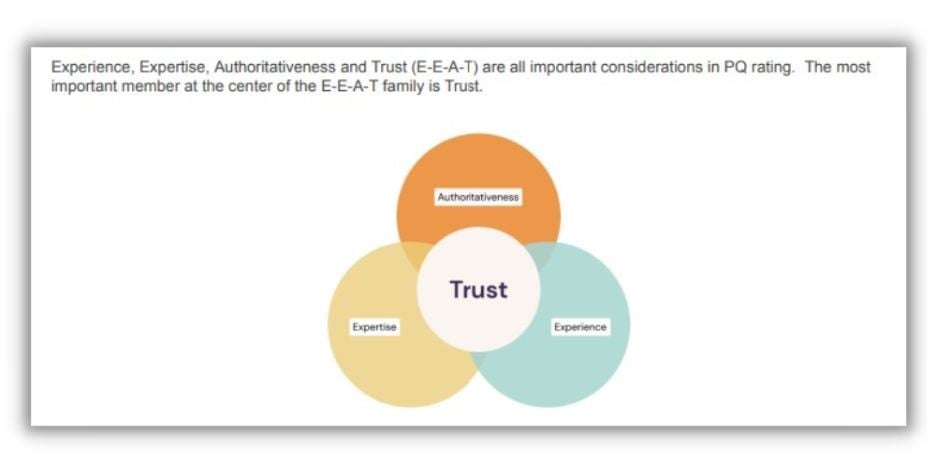
More recently, Google’s developer blog said that AI is OK in their book. But there is a significant wink with that confirmation. Only “content that demonstrates qualities of what we call E-E-A-T: expertise, experience, authoritativeness, and trustworthiness” will impress the human search raters that continually evaluate Google’s ranking systems.
Trust is clutch for SEO
Among Google’s E-E-A-T, the one factor that rules them all is trust.
[source]
We’ve already discussed that AI content is prone to fallacies, making it inherently untrustworthy without human supervision. It also fails to meet the supporting requirements because, by nature, it isn’t written by someone with expertise, authority, or experience on the topic.
Take a blog post about baking banana bread. An AI bot will give you a recipe in about two seconds. But it can’t wax poetic on the chilly winter days spent baking for its family. Or talk about the years it spent experimenting with various types of flour as a commercial baker. Those perspectives are what Google’s search raters look for.
It also seems to be what people crave, too. That’s why so many of them are turning to real people on TikTok videos to learn things they used to find on Google.
How to avoid losing SEO
The great thing about AI is it doesn’t mind sharing bylines. So when you do use a chatbot to speed up content production, make sure you reference a human author with credentials.
This is especially true for sensitive subjects like healthcare and personal finance, which Google calls Your Money, Your Life topics. “If you’re in a YMYL vertical, prioritize authority, trust and accuracy above all else in your content,” advises Elisa Gabbert, Director of Content and SEO for WordStream and LocaliQ.
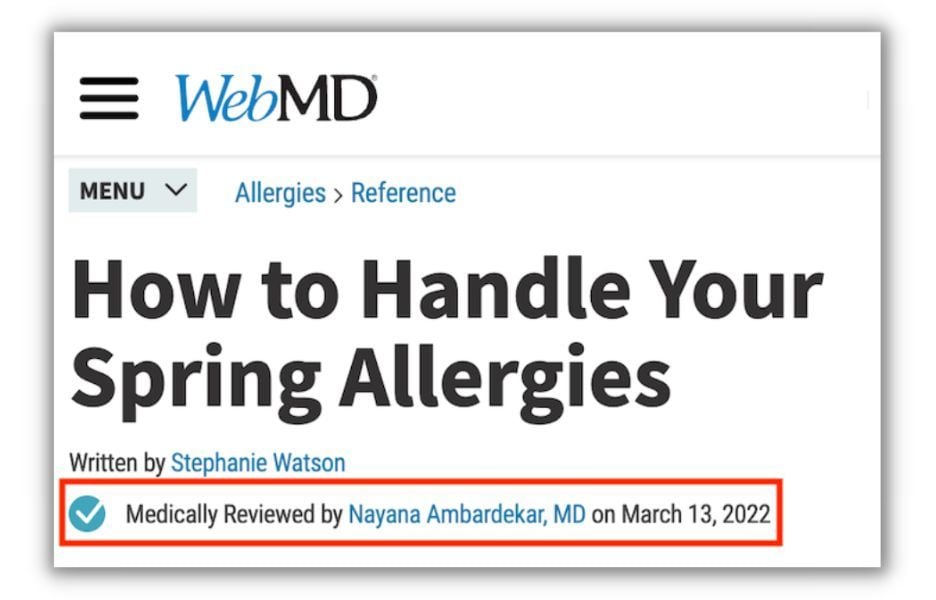
When writing about healthcare, for example, have your posts reviewed by a medical professional and reference them in the post. That’s a strong signal to Google that your content is trustworthy, even if it was started in a chatbot.
Risk #6: Legal challenges
Generative AI learns from work created by humans, then creates something new(ish). The question of copyright is unclear for both the input and output of the AI content model.
Existing work is likely fair game for AI
To illustrate (pun intended) the copyright question for works that feed large learning models, we turn to a case reported by technologist Andy Baio. As Baio explains, an LA-based artist named Hollie Mengert learned that 32 of her illustrations had been absorbed into an AI model, then offered via open license to anyone that wanted to recreate her style.

Caption: a collection of artist Hollie Mengert’s illustrations (left) compared with AI generated illustrations based on her style, as curated by Andy Baio.
The story gets more complicated when you learn that she created many of her images for clients like Disney, who actually own the rights to them.
Can illustrators (or writers or coders) who find themselves in the same spot as Mengert successfully sue for copyright infringement?
There’s not yet a clear answer to the question. “I see people on both sides of this extremely confident in their positions, but the reality is nobody knows,” Baio told The Verge. “And anyone who says they know confidently how this will play out in court is wrong.”
If the AI you use to create an image or article was trained on thousands of works from many creators, you’re not likely to lose a court case. But if you feed the machine ten Stephen King books and tell the bot to write a new one in that style, you could be in trouble.
Disclaimer: We aren’t lawyers so please get legal advice if you’re unsure.
Your AI content may not be protected either
What about content you create using a chatbot, is it covered by copyright laws? For the most part, it’s not unless you’ve done considerable work to edit it. Which means you’d have little recourse if someone repurposes (read: steals) your posts for their own blog.
For content that is protected it may be the AI’s programmer, not you, that holds the rights. Many countries consider the maker of the tool that produced a work to be its creator, not the person that typed in the prompt.
How to avoid legal challenges
Start by using a reputable AI content creation tool. Find one with plenty of positive reviews produced by a company that clearly addresses its stance on copyright laws.
Also, use your good judgment to decide if you’re intentionally copying a creator’s work or simply using AI to augment your own.
And if you want a fighting chance in court to protect what you produce, make lots of substantial changes. Or use AI to help create an outline, but write most of the words yourself.
Risk #7: Security and privacy breaches
AI tools present marketers with a broad range of potential threats to their system’s security and data privacy. Some are direct attacks from malicious actors. Others are simply users unwittingly giving sensitive information to a system designed to share it.
Security risks from AI tools
“There are plenty of products out there that look, feel, and behave like legitimate tools, but are in fact malware,” Elaine Atwell, the Senior Editor of Content Marketing at endpoint security provider Kolide, told us. “They’re extremely difficult to differentiate from legitimate tools and you can find them in the Chrome store right now.”
Type any version of “AI tools” into the Google Chrome store and you’ll find no shortage of options.
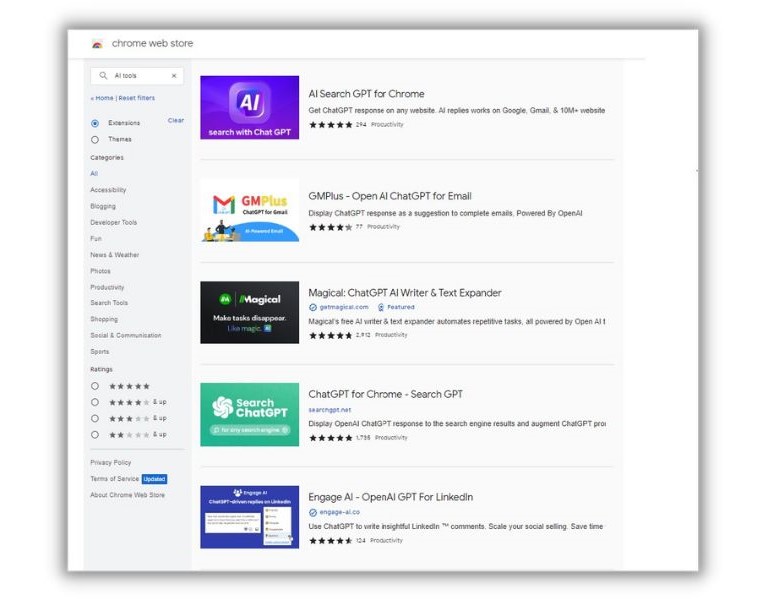
Atwell wrote about these risks on the Kolide blog. In her article, she referenced an incident where a Chrome extension called “Quick access to Chat GPT” was actually a ruse. Once downloaded, the software hijacked users’ Facebook accounts and swiped all of the victim’s cookies—even those for security. Over 2,000 people downloaded the extension every day, Atwell reported.
Privacy unprotected
Atwell says even a legitimate AI tool can present a security risk. “…right now, most companies don’t even have policies in place to assess the types and levels of risk posed by different extensions. And in the absence of clear guidance, people all over the world are installing these little helpers and feeding them sensitive data.”
Let’s say you’re writing an internal financial report to be shared with investors. Remember that AI networks learn from what they’re given to produce outputs for other users. All the data you place in the AI chatbot could be fair game for people outside of your company. And may pop up if a competitor asks about your bottom line.
How to avoid privacy and security risks
The first line of defense is to make sure a piece of software is what it claims to be. Beyond that, be cautious about how you use the tools you choose. “If you’re going to use AI tools (and they do have uses!) don’t feed them any data that could be considered sensitive,” Atwell says.
Also, while you’re reviewing AI tools for usefulness and bias, ask about their privacy and security policies.
Mitigate the risks of using AI for marketing
AI is advancing at an incredible rate. In less than a year Chat GTP has already seen significant boosts in its capabilities. It’s impossible to know what we’ll be able to do with AI in even the next six to twelve months. Nor can we anticipate the potential problems.
Here are several ways you can improve your AI marketing outcomes while avoiding some of the most common risks:
- Have human editors review content for quality, readability, and brand voice
- Scrutinize each tool you use for security and capability
- Regularly review AI-directed ad targeting for bias
- Assess copy and images for potential copyright infringement
To recap, let’s review our list of risks that come with using AI for marketing:
- Machine learning bias
- Factual fallacies
- Misapplication of AI tools
- Homogeneous content
- Loss of SEO
- Legal challenges
- Security and privacy breaches
Copyright www.wordstream.com